This Teacher Runs on Coffee and Christmas: A Design Review
As an embroidery digitizer and product reviewer, I approach every new graphic with a specific question: will this actually stitch out cleanly, or is it just a pretty screen image? When evaluating This Teacher Runs on Coffee and Christma, my focus shifts immediately from digital aesthetics to physical execution. This design captures a very specific seasonal mood that resonates deeply with educators during the holiday rush, but translating that sentiment into a tangible handmade product requires careful technical consideration. The phrase itself is playful and relatable, making it a strong candidate for custom apparel and gifts, yet the typography and layout demand respect during the digitizing and stitching process.
First Impressions and Seasonal Relevance
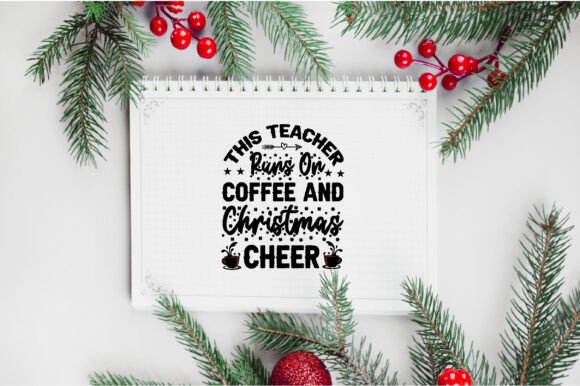
Visually, this design strikes a balance between whimsy and readability. For those of us in the craft business or running an Etsy shop, we know that teacher-themed merchandise peaks between Thanksgiving and winter break. The combination of coffee culture and Christmas cheer targets a niche audience that buys impulsively for self-care or colleague gifts. As a piece of Graphics intended for Crafts, the artwork likely features script or bold serif fonts paired with illustrative elements like mugs, steam, or holly. From a designer’s perspective, this visual hierarchy is excellent for embroidery because it creates natural color breaks. However, the success of This Teacher Runs on Coffee and Christma relies entirely on how well those graphical elements translate into stitches. A design that looks balanced on a monitor can become top-heavy or illegible once thread tension and fabric texture are introduced.
Real-World Application: The Holiday Teacher Sweatshirt
To truly evaluate this asset, I mentally place it in a real production scenario. Imagine preparing a custom crewneck sweatshirt for a local school staff holiday party. This is where This Teacher Runs on Coffee and Christma needs to perform. Sweatshirts are typically fleece-lined cotton blends, which present a textured surface that can swallow fine details. If I were producing this sweatshirt embroidery project, I would assess whether the lettering is thick enough to sit on top of the fabric pile rather than sinking into it.
In this scenario, the design serves as the centerpiece of a personalized gift. Teachers want something they can wear casually but proudly. If the design uses too much dense fill stitch, the sweatshirt will become stiff and unappealing to wear. Conversely, if the running stitch details are too delicate, they might get lost against the heathered texture of the garment. My professional judgment suggests this design works best when adapted for medium-weight knits, potentially utilizing an applique design technique for larger background shapes to reduce stitch count and maintain garment softness. This practical adaptation turns a standard digital file into a high-value retail item that customers actually want to buy and wear.
Technical Performance Across Different Substrates
Versatility is key for any digital embroidery file in a commercial library. While sweatshirts are a primary use case, This Teacher Runs on Coffee and Christma must also be evaluated for smaller, more challenging items. Consider the tote bag design application. Canvas totes are popular teacher gifts, but canvas is unforgiving. It has zero stretch and high friction. On this substrate, the design needs robust column widths. If the original SVG has thin, trendy lines, they must be reinforced during digitization to prevent needle breaks or skipped stitches on heavy canvas.
Conversely, think about baby embroidery or holiday tea towels. These items often use lighter weight fabrics or waffle-weave textures. Here, the concern shifts from coverage to puckering. A dense version of this design could distort a lightweight kitchen towel, ruining the drape. For these applications, I would recommend testing a low-density version or using a cutaway stabilizer aggressively. The design’s performance varies wildly depending on whether you are stitching on a structured cap or a flowing scarf. As an Etsy seller or small shop owner, offering this design across multiple product types increases your revenue potential, but only if you validate the hoop size and density for each specific material first.
Navigating Fabric Limitations and Hoop Constraints
Not every surface is friendly to detailed typography. When reviewing This Teacher Runs on Coffee and Christma, I must highlight where caution is necessary. Curved surfaces like caps are notoriously difficult for multi-line text designs. If this graphic is tall or vertically stacked, it may distort around the crown of a hat. In such cases, the design might need to be reformatted into a wider, flatter arrangement specifically for headwear. Similarly, stretchy performance fabrics used in modern teacher activewear require specialized handling. Standard satin stitch borders can tunnel on spandex unless properly underlaid.
Dark fabrics also present a challenge. If the design relies on subtle shading or light-colored outlines, it may vanish against navy or black garments common in winter wardrobes. High contrast is non-negotiable for commercial embroidery. Before listing a finished product, verify that the thread colors pop against your darkest inventory option. Additionally, be mindful of tiny decorative accents. Elements like snowflakes or coffee steam that look charming at 4 inches wide may become indistinguishable blobs at 2 inches. Always respect the minimum legibility threshold for text; if the font becomes unreadable when scaled down for a pocket placement, do not force it. Scale up or simplify.
Impact on Perceived Value and Brand Trust
The quality of your stitch-out directly influences customer trust. When a buyer receives a finished product featuring This Teacher Runs on Coffee and Christma, they are judging your craftsmanship, not just the original artist's drawing. Clean registration, smooth satin columns, and appropriate density signal professionalism. Sloppy edges or thread breaks suggest mass-produced, low-effort goods. For small shop product lines, consistency builds brand loyalty. If you sell this design as a digital asset to other makers, providing clear notes on recommended stabilizers and fabric pairings adds immense value. It shows you understand the end-user's struggle.
Furthermore, presentation matters. Using accurate printable mockup templates that reflect realistic stitch textures helps manage buyer expectations. Do not mislead customers with flat vector images if the actual embroidery has significant texture. Honest representation reduces returns and increases positive reviews. Whether you are selling the embroidery file itself or the physical embroidered item, the integrity of the design execution determines its market longevity. A well-executed teacher theme can be a seasonal bestseller for years, while a poorly executed one damages your reputation after one holiday cycle.
Essential Designer Notes for Successful Execution
Before you load This Teacher Runs on Coffee and Christma into your machine or list it in your shop, adhere to these professional protocols:
- Test Stitch on Scrap: Never assume compatibility. Test on the exact fabric and stabilizer combination you intend to use for the final project.
- Verify Licensing: Confirm whether the instant download includes commercial rights for selling physical products versus digital redistribution. Protect your business legally.
- Check Thread Contrast: View the design in black and white within your software to ensure tonal separation exists independent of color choices.
- Assess Stabilizer Needs: Match the stabilizer weight to the design density and fabric type. Cutaway for knits, tear-away for stable wovens, and water-soluble toppings for high-pile fabrics.
- Review Small Details: Inspect corners and tight curves. Manually adjust stitch angles if necessary to prevent bulk buildup or fraying.
- Mockup Realistically: Use photos of actual stitched samples for marketing whenever possible to showcase true texture and scale.
- Confirm Hoop Compatibility: Ensure the design dimensions fit comfortably within your machine’s maximum sewing field with adequate margin for hoop clearance.
By treating This Teacher Runs on Coffee and Christma as a technical blueprint rather than just a cute graphic, you elevate your work from hobbyist to professional. The intersection of festive sentiment and technical precision is where successful holiday embroidery businesses thrive. Take the time to understand the design's behavior, and your finished projects will reflect the care and quality that teachers—and your customers—truly appreciate.